
Kentucky Lake fishing guide: where crappie and bass bite
Kentucky Lake is one of the biggest reservoirs in the country, built where Kentucky Dam backs up the Tennessee River, and it's best known for crappie. Bass, catfish, and smallmouth round out a lake big enough to fish differently every month. This guide covers where to start and what changes with the seasons.
A big lake built for fish
Kentucky Dam, built on the Tennessee River, created a reservoir that now covers roughly 160,000 acres with more than 2,000 miles of shoreline - one of the largest lakes east of the Mississippi.
It sits inside the Land Between the Lakes region, right next to its sister reservoir, Lake Barkley, and the lake itself runs long and narrow for dozens of miles, which is why local patterns change a lot between its upper and lower ends.
A lake this long behaves almost like several lakes stitched together. The stretch near the dam is wider, deeper, and more current-driven, while the upper reaches near the Tennessee line narrow down and warm faster in spring. Knowing roughly where you are on that spectrum tells you a lot before you even make a cast.
Species and what they're doing
- Crappie: the lake's signature fish, suspending around brush, standing timber, and bridge piling most of the year, and the main reason many anglers plan a trip here at all.
- Largemouth bass: shallow cover and creek-arm points, especially in spring and fall, sliding onto nearby drop-offs once the sun gets high or the water warms past their comfort zone.
- Smallmouth bass: rock and gravel points and ledges, more common on the lake's lower, rockier stretches near the dam, where current and harder bottom suit them better than the softer upper lake.
- Catfish: deep channel edges and current breaks near the dam and river bends, feeding mostly by scent rather than sight, which is why a bait that sits still and puts off scent out-produces anything fast-moving.
Season-by-season plan
| Season | Where | What to try |
|---|---|---|
| Spring | Shallow coves and creek arms as fish move in to spawn | Spinnerbait or crankbait around brush and stumps |
| Summer | Main-lake points and ledges, deeper brush and timber | Slow jig or minnow under a float for crappie |
| Fall | Backs of coves and upper arms where baitfish bunch up | Crankbait or small swimbait worked slowly |
| Winter | Steep ledges and deep standing timber near the channel | Small jig or minnow fished vertically, slow |
Structure worth a look
- Points that drop quickly into deeper water hold bass and smallmouth stacked along the slope, and working a bait from shallow to deep across the point covers the whole group in one pass.
- Steep ledges beside the main channel are a reliable cold-season holding spot for crappie and smallmouth, since the quick access to deep water lets fish move up to feed and back down to rest without traveling far.
- The backs of coves warm first in spring and pull baitfish - and the bass chasing them - into 4 to 14 feet of water, often well before the main lake has warmed at all.
- Upper arms where a creek narrows into the lake concentrate fish in 12 to 16 feet whenever current is moving, especially after rain pushes fresh, oxygenated water through.
Getting on the water
Public access is spread all along both the Kentucky and Tennessee sides of the lake, with ramps concentrated near Kentucky Dam, Paris Landing, and the Land Between the Lakes shoreline.
Because the lake is so long, pick a ramp close to the stretch you plan to fish rather than running a long way down the main channel. A shorter run also leaves more daylight for fishing and less exposure if wind builds on open water.
Water level and why it matters
Kentucky Lake is managed as a reservoir, so the water level moves with dam operations and rainfall rather than staying fixed the way a natural lake would.
A few feet of change can expose flats near the backs of coves or push fish off shallow cover and onto the nearest drop-off, so it pays to know where the level sits before you pick a spot.
In practice this means the same cove that produced fish last month might fish completely differently a few weeks later if the level has shifted, which is part of why checking current conditions before each trip matters more here than on a stable lake.
Safety basics
- Wear a life jacket - the lake is big enough to build real waves when wind picks up across open water, especially on the wider stretches near the dam.
- Cold water in winter and early spring is dangerous even for strong swimmers; dress for the water temperature, not the air, and expect a dunking to feel far colder than you'd guess from the forecast.
- Check current Kentucky fishing license requirements and size or bag limits before you keep anything - rules can differ for crappie, bass, and catfish, and can change from year to year.
- Watch for barge traffic near the main channel and the dam, and give commercial vessels a wide berth since they can't maneuver quickly.
Check before you go
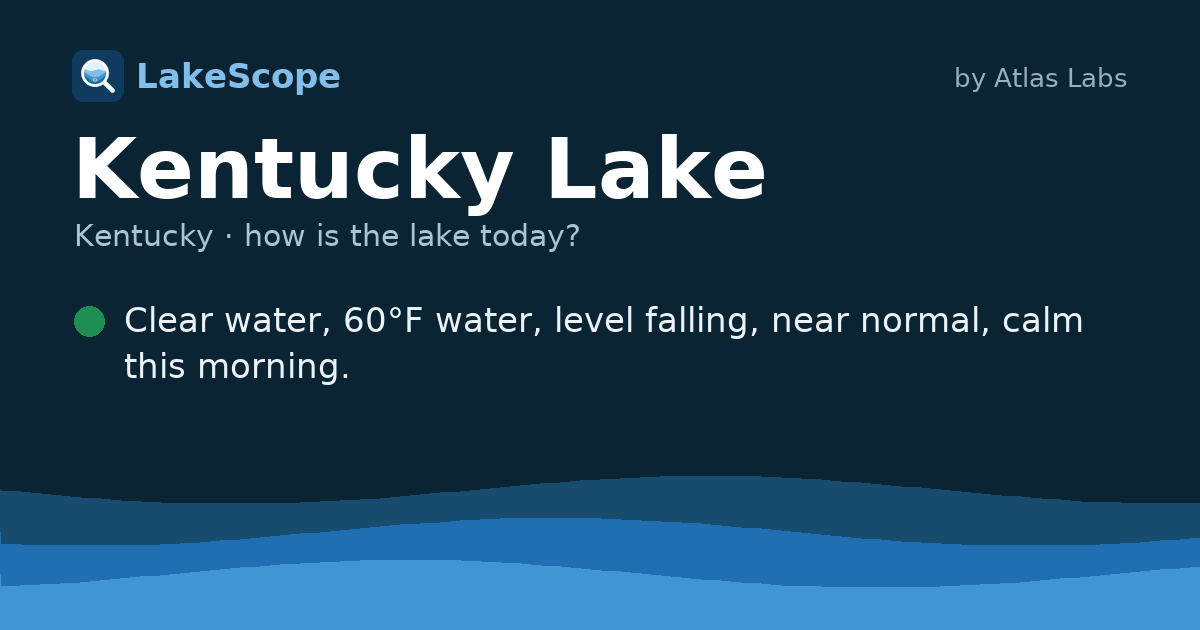
LakeScope shows today's water temperature, lake level, wind direction, and bite-time windows for Kentucky Lake, so you can match the plan above to what the lake is actually doing before you load the boat.
Because conditions here can shift meaningfully in a single week, a quick check the morning of your trip is worth more than relying on what worked last time out.
Questions
What is Kentucky Lake best known for?
Crappie. It's one of the most productive crappie lakes in the country, though largemouth bass, smallmouth bass, and catfish are all common too.
How deep is Kentucky Lake?
It runs to more than 50 feet in the old river channel, but most of the lake is far shallower - the fishing is mostly about points, ledges, and cover in the 4 to 20 foot range.
Is Kentucky Lake a natural lake or a reservoir?
It's a reservoir, formed when Kentucky Dam was built on the Tennessee River.
What's the best season for crappie on Kentucky Lake?
Crappie bite year-round, but shallow brush in spring and deep ledges or timber in winter are the two most reliable windows.
Do I need a fishing license?
Yes - check Kentucky's current license and limit rules before you fish, since they can vary by species and by season.
Why does the lake fish so differently from one end to the other?
Kentucky Lake is unusually long and narrow, so the water near the dam behaves differently from the shallower, warmer water many miles upstream - treat it almost like separate lakes when planning a trip.
Kentucky Lake every morning
Water temperature, level, wind and bite times on your phone.

Kentucky Lake today Plan a trip