
Lake Guntersville fishing guide: bass, crappie and grass beds
Lake Guntersville is a Tennessee River reservoir in north Alabama known across the bass fishing world for its thick grass beds. Largemouth bass, crappie, catfish, and bluegill all live here, and the grass is the key to most of them. This guide covers where the grass holds fish and how wind and season change the plan.
Why anglers travel for this lake
Lake Guntersville was formed when Guntersville Dam was built on the Tennessee River, and it's widely considered one of the best bass fishing lakes in the country.
The reason is grass: hydrilla and milfoil grow thick across huge areas of the lake, giving bass, crappie, and bluegill cover and feed all at once.
That grass isn't just cover - it also produces oxygen and attracts the insects and baitfish that the whole food chain depends on, which is why grass-heavy lakes like this one so consistently out-produce lakes without it.
Species and where they sit
- Largemouth bass: grass edges, points, and wind-blown banks, cruising the outside edge of the grass to ambush anything that strays too far from cover.
- Crappie: brush, ledges, and deeper grass edges, especially in cooler months when they pull off the thickest, shallowest grass.
- Catfish: steep ledges and deeper edges near the channel, generally away from the densest grass mats.
- Bluegill: shallow grass and cover close to the bank, often the easiest fish on the lake to find in numbers for a family trip.
Season-by-season plan
| Season | Where | What to try |
|---|---|---|
| Spring | Shallow grass and creek points as fish move up to spawn | Spinnerbait or crankbait along the grass edge |
| Summer | Deeper grass edges and ledges, 8 to 16 feet | Slow jig or drop-shot worked along the bottom |
| Fall | Upper arms where creeks feed the lake | Spinnerbait or crankbait worked actively |
| Winter | Steep ledges and deeper grass near the channel | Small jig or minnow under a float, slow |
Structure worth a look
- Points that drop quickly into deeper water hold bass and crappie stacked along the edge, usually 4 to 16 feet, and are a good first stop any time of year.
- A steep ledge beside deep water is a dependable cold-weather spot for crappie and catfish, roughly 8 to 16 feet, since it gives fish fast access between deep and shallow.
- A wind-blown bank gets extra attention once the wind is pushing into it - baitfish get pinned against the grass and bass follow, often turning a slow morning into a fast one within minutes of the wind building.
- Upper arms where a creek narrows into the lake hold fish in the 20 to 24 foot range when current is moving, particularly productive after rain raises flow through the system.
Reading the wind
On a lake this grass-heavy, wind does a lot of the work for you - it pushes baitfish against whichever bank it's blowing into, and bass follow to feed along that edge.
A calm morning that turns breezy by afternoon is often the signal to switch from fishing the grass generally to fishing specifically the wind-blown side of it.
The same wind that activates the bite can also stir sediment into the water along a shallow, wind-hammered bank, so give it a little time to settle before writing off a spot that looks murky.
Water level and the grass
Guntersville's level is managed by the dam, and even small changes affect how much grass is exposed or how deep the healthiest grass edge sits.
A lower lake can concentrate fish onto fewer, deeper grass lines, which sometimes makes them easier to find even though less water is fishable.
A higher lake can flood new grass and cover that wasn't reachable before, opening up fresh shallow water worth exploring once it's had a little time to establish.
Safety and rules
- Wear a life jacket - the lake is large enough to build real waves when wind picks up across open water.
- Watch for submerged grass and stumps when running the boat, especially off the main channel, since thick grass mats can hide a prop-fouling stump beneath them.
- Check Alabama's current fishing license and limit rules before you keep anything.
- Cold water in winter is dangerous even for confident swimmers - dress for the water, not the air.
Boat access
Public ramps are spread around the lake, including stretches near the city of Guntersville itself, so it's worth picking one close to the creek arm or grass flat you plan to fish first.
Because grass can grow right up to the surface in places, idle carefully through unfamiliar shallow flats rather than running at speed - a thick mat can hide a stump or a sharp rise in bottom contour.
Matching gear to grass fishing
Braided line is a common choice around Guntersville's grass, since it has little stretch and the strength to pull a hooked fish out of thick cover rather than letting it bury deeper in.
A stiffer rod helps set the hook through grass before a fish can wrap around a stem, which matters more here than on a lake with open, clean bottom.
Weedless or semi-weedless lure designs, from a Texas-rigged soft plastic to a weedless spoon, let you work the thickest mats without constantly clearing fouled hooks, which saves a lot of time over the course of a day on grass this dense.
Check before you go
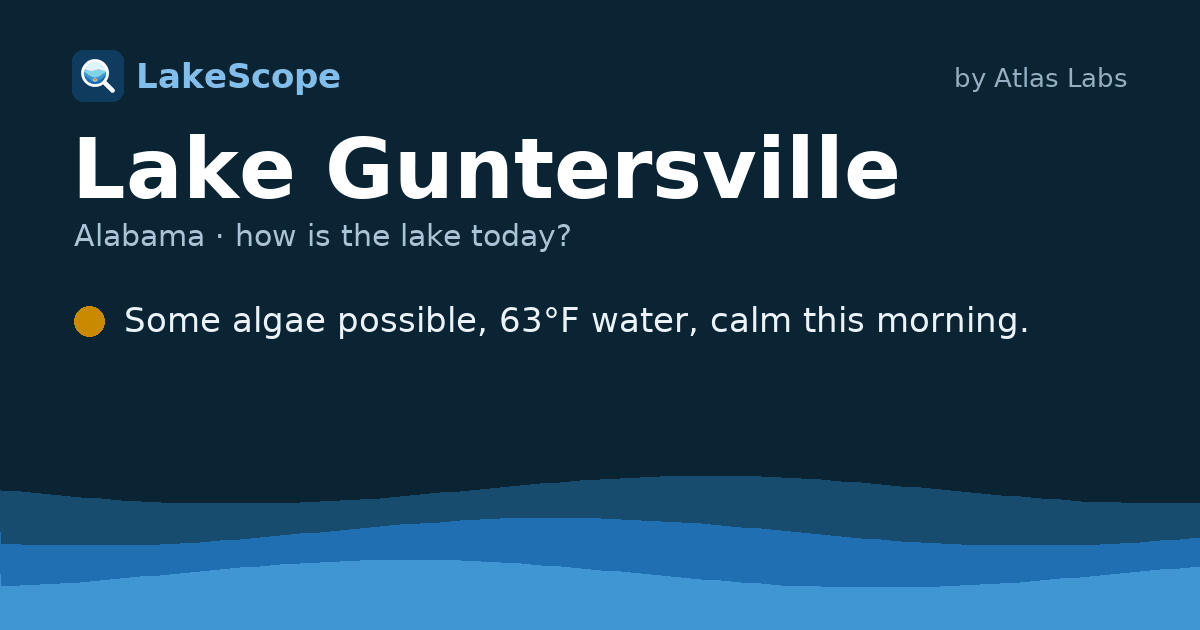
LakeScope shows today's water temperature, level, wind direction, and bite-time windows for Lake Guntersville, so you can decide which bank and which grass line to start on before you launch.
Given how much the grass bite depends on wind and water temperature, this is one lake where a quick check genuinely changes which side of the lake is worth your time.
Questions
Why is Lake Guntersville so famous for bass fishing?
Its dense hydrilla and milfoil grass beds give bass, bluegill, and crappie thick cover and plenty of food, and the lake hosts bass tournaments throughout the year.
How big is Lake Guntersville?
It covers about 69,000 acres with more than 900 miles of shoreline.
What's the best bait for Guntersville's grass?
A spinnerbait or crankbait worked along the grass edge covers water fast; a slow jig or drop-shot works better once fish pull into deeper grass.
Does wind direction matter on Guntersville?
Yes - wind pushes baitfish against whichever bank it's blowing into, and bass typically follow to feed along that edge.
Do I need a license to fish Lake Guntersville?
Yes - check Alabama's current fishing license and limit rules before you fish.
Is Guntersville good for crappie as well as bass?
Yes - crappie are common around brush, ledges, and deeper grass edges, especially once the water cools in fall and winter.
Lake Guntersville every morning
Water temperature, level, wind and bite times on your phone.

Lake Guntersville today Plan a trip