
Sam Rayburn Reservoir fishing guide
Sam Rayburn Reservoir covers about 114,500 acres of East Texas pine country and has a long reputation as a top-tier bass lake. Largemouth bass get most of the attention, but crappie and catfish stack up reliably on the lake's deep brush-covered ledges.
A big East Texas reservoir
At About 114,500 acres with roughly 560 miles of shoreline, Sam Rayburn is one of the largest reservoirs in Texas, formed by a dam on the Angelina River. Its size gives anglers a lot of water to cover, but the lake's bass fame comes down to flooded timber, submerged roadbeds and brush that create structure throughout.
At around 80 feet at its deepest, it's not an especially deep lake overall, which means temperature swings reach most of the water column and shift fish location noticeably through the year.
The combination of a large surface area with a relatively shallow average depth also means wind has a big effect on the whole lake, stirring and mixing water more thoroughly than it would on a deeper reservoir of similar size.
Sam Rayburn's reputation extends well beyond Texas, and it regularly draws anglers from out of state specifically chasing its largemouth bass, which has helped support a strong network of local guides and marinas familiar with the lake's structure.
Species and where they hold
- Largemouth bass are the main draw, found around timber, points and brushy ledges depending on season.
- Crappie stack tight to brush, especially on steep ledges near deeper water.
- Catfish share that same deep brush, particularly in the heat of summer.
- White bass school and feed aggressively, often pushed by wind along open banks, and can provide fast, non-stop action once you find a school.
- Because so many species relate to the same brush and timber, a single piece of good structure can hold more than one of them at different depths on the same day.
Season by season
| Season | Primary target | Where | Bait |
|---|---|---|---|
| Spring | Largemouth bass | Shallow coves and upper arms | Spinnerbait or crankbait along the edge |
| Summer | Crappie, catfish | Deep brush on steep ledges | Minnow on deep brush in the heat |
| Fall | White bass, largemouth | Wind-blown banks | Match local baitfish, work the wind side |
| Winter | Crappie, catfish | Deepest ledges and arms | Slow presentation, patient retrieve |
Where to start looking
The steep ledges scattered around the lake are a go-to for crappie and catfish, often holding fish from 14 to 22 feet right along the wall where deep water meets structure. Upper arms, where the lake narrows toward its feeding creeks, concentrate baitfish and draw largemouth and crappie into 24 to 28 feet. On a windy day, check the bank the wind is pushing into first; baitfish get pinned against it and bass follow.
Because so much of the lake's cover sits underwater and out of sight, it's worth spending time early in a trip idling over likely-looking areas and watching your electronics before committing to anchor or cast, rather than fishing purely by memory of where structure used to be.
Getting on the water
Sam Rayburn has public and private access points around its shoreline typical of a reservoir this size. Confirm your chosen ramp is open and suitable for your boat before launching, since conditions and availability can change by season.
Given the size of the lake, it's worth deciding which arm or section you plan to fish before you launch, since running from one end of Sam Rayburn to the other can eat up a meaningful chunk of a half-day trip.
Several marinas around the lake also offer guided trips, which can be a practical way to learn the timber layout of a new area quickly before fishing it on your own in future trips, especially for visitors making their first trip to the lake.
Water level matters for the timber
Because so much of Sam Rayburn's structure is flooded timber and brush, water level changes directly affect what's reachable. A higher lake can put bass up into cover that's dry at lower levels, while a drop exposes stumps and shallow brush that become navigation hazards as much as fishing spots.
A noticeably lower lake can also concentrate fish onto a smaller set of remaining deep structure, which sometimes means better numbers on the spots that are still holding water, if you can find and reach them safely. Checking the current level before a trip is a quick habit that pays off across almost every season on this lake.
Safety and rules
- Wear a life jacket at all times on the water, especially around submerged timber where a sudden stop is more likely.
- Watch for stumps and standing timber near the surface, particularly when the lake is running lower than usual.
- Afternoon thunderstorms build quickly in East Texas; keep an eye on the sky and head in early if it darkens.
- Check Texas Parks and Wildlife rules for license requirements and limits before you fish.
- Run at reduced speed in unfamiliar timber-filled areas, even if you've fished the general area before, since submerged structure positions can change.
- Keep a close eye on the horizon during summer afternoons, since fast-building storms can turn a calm lake rough with little advance warning.
A lake that rewards patience with structure
Because Sam Rayburn's best water is so often underwater and invisible from the surface, it's a lake where spending real time learning a handful of timber lines and roadbeds pays off more than running from spot to spot hoping to stumble onto fish. Many regulars fish the same core group of brush piles and stumps all season, adjusting depth and bait rather than constantly searching for new water.
Check before you go
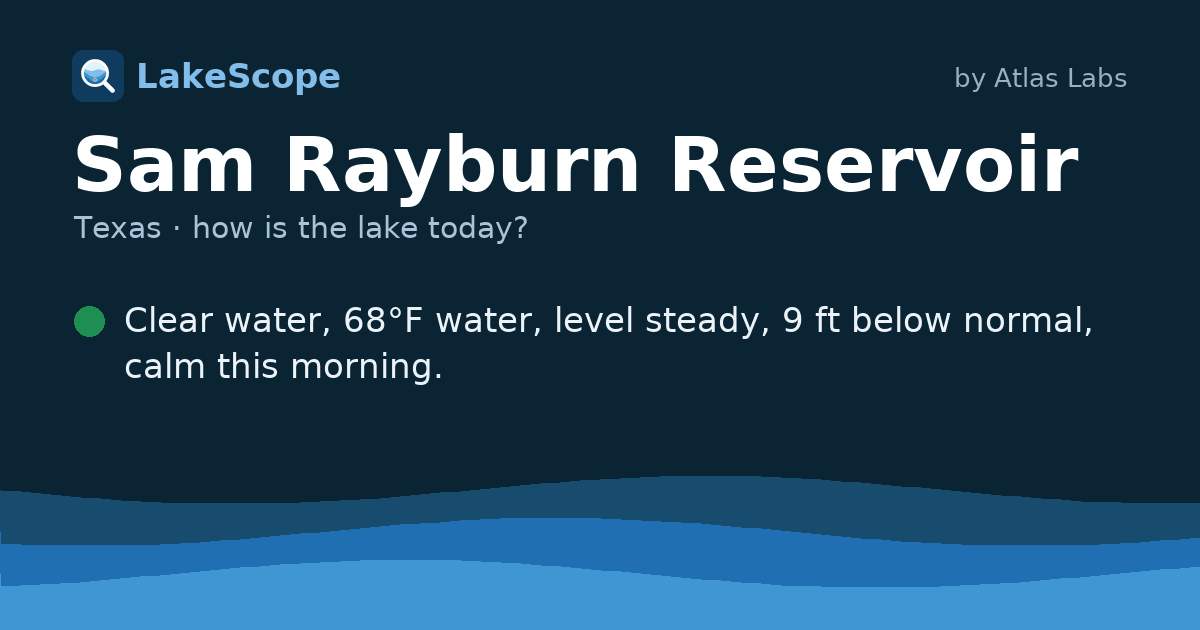
LakeScope shows today's water temperature, level, wind and bite times for Sam Rayburn, so you can plan around the current conditions rather than a general seasonal guess.
Questions
How big is Sam Rayburn Reservoir?
About 114,500 acres with roughly 560 miles of shoreline, making it one of the largest reservoirs in Texas.
What makes Sam Rayburn good for bass fishing?
Extensive flooded timber, brush and roadbeds give largemouth bass abundant structure to hold on throughout the lake.
What other fish are in Sam Rayburn besides bass?
Crappie, catfish and white bass are all common, with crappie and catfish often found together on deep brushy ledges.
How deep is Sam Rayburn Reservoir?
around 80 feet at its deepest, which is shallow enough that the whole water column responds to seasonal temperature changes.
Is flooded timber a hazard for boats at Sam Rayburn?
Yes, stumps and standing timber can sit just under the surface, especially when the lake is lower than usual, so run cautiously away from marked channels.
Does wind affect fishing a lot at Sam Rayburn?
Yes, the lake's large surface area relative to its depth means wind mixes and moves baitfish noticeably, and wind-blown banks are a reliable pattern in fall.
Sam Rayburn Reservoir every morning
Water temperature, level, wind and bite times on your phone.

Sam Rayburn Reservoir today Plan a trip