
Lake Mead fishing guide: striped bass, depth and ramps
Lake Mead, backed up behind Hoover Dam on the Colorado River near Las Vegas, is a vast desert reservoir where striped bass rule open water and largemouth, catfish and crappie hold tighter to structure. With depths reaching into the hundreds of feet, finding the right depth band matters more than finding a single hot spot, and the lake's sheer size means wind and bait location do most of the work of concentrating fish.
Scale and depth
Lake Mead is enormous — about 158,000 acres (roughly 247 square miles) when full, with some 750 miles of shoreline, and more than 500 feet deep near the dam at full pool (around 400 feet at recent lower levels). Few US reservoirs offer this much open water or this much vertical range in one place.
That scale means fish spread out across huge areas rather than piling onto a handful of obvious spots. Wind, bait location and depth do more to concentrate striped bass here than any single piece of shoreline structure, so reading conditions matters as much as reading a map.
Species to target
| Species | Where it holds | What draws strikes |
|---|---|---|
| Striped bass | Open water, wind-blown banks, points | Swimbait or live shad fished where bait is |
| Largemouth bass | Coves, points, rock structure | Swimbait, live shad, or a slow jig near bottom |
| Catfish | Coves and deeper flats | Cut bait fished on bottom after dark |
| Crappie | Backs of coves, brush | Small jig or minnow under a float |
Reading the structure
On a day with wind, start on the bank it's blowing into — bait gets pushed across open water and piles up against a 6–12 ft bank, pulling striped bass and largemouth with it, often producing some of the fastest action of the day.
Points are the next-best bet, especially where the bottom falls from 12 ft down to 16–20 ft; both species rest deep and slide up to feed along the slope. The backs of coves, in 4–16 ft, hold crappie and largemouth around schooled baitfish, especially useful on calmer days when the open lake is uncomfortable to fish. And where a canyon arm narrows upstream, Mead's drowned river channel can run surprisingly deep — striped bass and crappie have been found suspended as deep as 80 ft in these upper arms, far below where most anglers think to look.
Mead's underwater terrain is dramatic — old canyon walls, submerged hills and a flooded river channel — and LakeScope's 3-D lake bed view is the fastest way to see where those features sit before you run anywhere on a lake this large.
Season by season
- Spring — striped bass push into coves and creek arms chasing spawning shad; topwater action can be excellent at dawn.
- Summer — fish go deep during the heat of the day; focus on points and open-water schools early and late, and expect strong afternoon heat on the water as well as in it.
- Fall — cooling water triggers a strong feeding push; shad schools and striper activity concentrate in coves and upper arms.
- Winter — fish hold deep and slow near the main lake; patience and vertical presentations pay off.
Ramps and launch points
Hemenway Harbor Launch Ramp and Pearce Ferry Take-Out are named public access points on Mead. Boulder Harbor Launch Ramp has been listed as closed — always confirm the status of a ramp before you tow out, since conditions and closures on Mead can change with water level.
The app maps 14 ramps around the lake to help you find one that's open and close to your plan for the day, which matters on a lake where driving between launch areas can take a long time by road.
Water level matters here more than most lakes
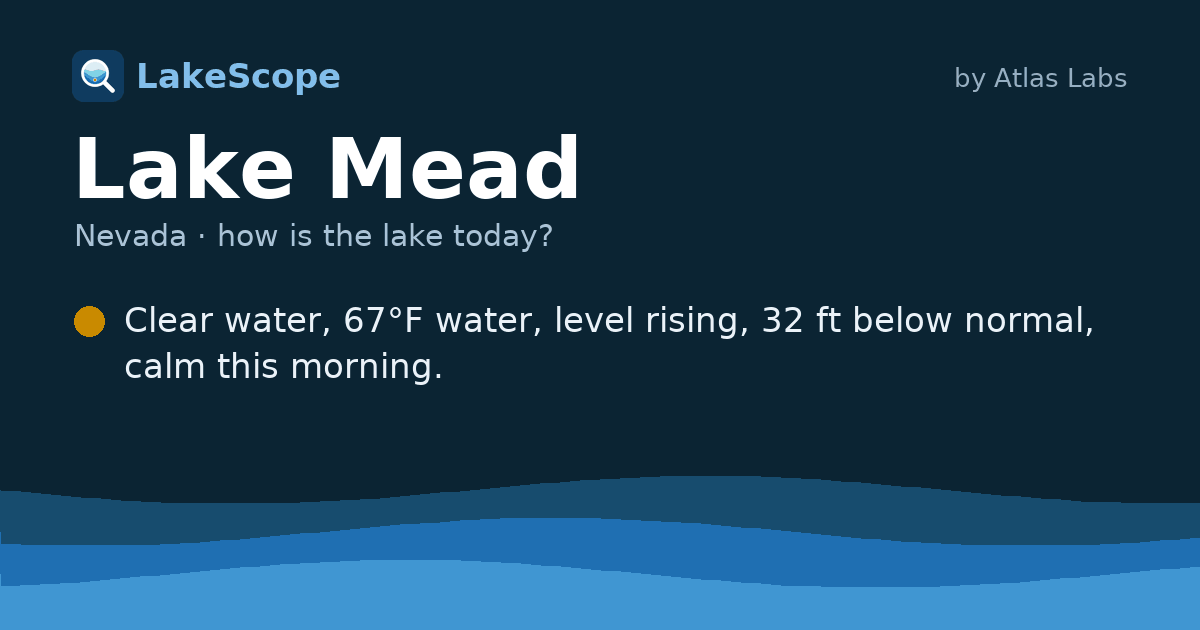
Mead's level has swung dramatically over the years because it's the main storage reservoir for the lower Colorado River. A big drop can expose points that used to be underwater, strand a ramp, or turn a familiar cove into a very different shape than the one you remember.
Check LakeScope's current level reading for Mead before every trip — what worked last season may be sitting on dry ground now, and a spot that used to be a shallow flat might now be a steep new drop-off.
Fishing the open desert water
Unlike a wooded reservoir, Mead offers very little shade or wind shelter once you leave a cove, so plan around the heat in summer and the wind on exposed stretches year-round. Sun protection and extra water for yourself are as important as any tackle choice on a long day here.
Because so much of the lake is open water with few landmarks, many anglers lean on electronics and a chart to find submerged points and humps that aren't visible from the surface at all.
Safety and rules
- Wear a life jacket — Mead's open water can turn choppy with little warning.
- Afternoon wind on open stretches can build quickly; have a plan to reach sheltered water.
- Water stays cold well into the warmer months at depth; dress for the chance of going in, not just the air temperature.
- Check current Nevada and Arizona fishing license and limit rules — Mead straddles both states.
Check before you go
On a lake this big, picking the right bank, depth and bait often matters more than the exact spot, and conditions can differ a lot between one arm of the lake and another.
LakeScope shows today's water temperature, lake level, wind direction and recent bite times for Mead, which narrows down where to start before you ever leave the dock.
Questions
How deep is Lake Mead?
Around 418 ft at its deepest near Hoover Dam, though most fishing happens well above that depth along points, coves and banks.
What is the best bait for striped bass on Lake Mead?
Swimbaits or live shad fished where the bait is holding — often a wind-blown bank or a main-lake point — are the standard producers.
Which state's license do I need for Lake Mead?
Lake Mead sits on the Nevada–Arizona border, so check current rules for both states depending on where you launch and fish.
Is Boulder Harbor Launch Ramp open?
It has been listed as closed; always confirm current ramp status before you go, since conditions change with water level.
Why does Lake Mead's water level matter so much?
Because it's a major Colorado River storage reservoir, Mead's level can swing a long way, exposing structure and changing ramp access from one season to the next.
Why do striped bass sometimes suspend so deep on Lake Mead?
In the narrow upper canyon arms, the old river channel runs deep, and striped bass and crappie can hold far below where anglers on a shallower lake would normally look.
Lake Mead every morning
Water temperature, level, wind and bite times on your phone.