
Lake Havasu fishing and boating guide
Lake Havasu sits on the Colorado River between Arizona and California, known as much for its boating and the London Bridge as for its fishing. Striped bass, smallmouth, largemouth and bluegill all hold on the lake's rocky ledges, which dominate the structure here more than any other feature.
A river lake built on rock
Covering about 19,300 acres, Lake Havasu is formed by Parker Dam on the Colorado River. Its banks are dominated by rock, which shapes almost every fishing pattern here: smallmouth and striped bass relate to ledges and rocky points rather than weeds or brush.
At around 90 feet at its deepest, it's not an especially deep lake, but the steep rock drop-offs along its shoreline give fish fast access to deeper water without needing to travel far.
Being a river reservoir rather than a natural lake, Havasu also has a defined current running through it from upstream releases, which adds another variable beyond wind that experienced anglers factor into where fish will hold on a given day.
The lake's location between two states and its position along a major stretch of the Colorado River have also made it a well-known stop for travelers, which brings steady visitor traffic through the area across most of the year, especially around the main channel and bridge.
Fish species
- Striped bass are a major draw, often found along the same rocky ledges as smallmouth.
- Smallmouth bass are closely tied to rock structure throughout the lake.
- Largemouth bass favor calmer, more sheltered pockets away from current.
- Bluegill round out the panfish option in shallower rocky and shoreline areas, and are a solid choice for a relaxed afternoon.
- Because striped bass and smallmouth often share the same rock walls, it's common to catch both species working the same stretch of ledge without needing to change location.
Rock rules this lake
Unlike reservoirs built around flooded timber or weed beds, Havasu's fishing almost entirely comes back to rock. The steep ledges that line much of the shoreline hold striped bass and smallmouth together at a wide range of depths, from as shallow as 4 feet to over 25 feet depending on time of day and season. If a ledge isn't producing, try a different depth along the same wall before moving to a new spot entirely.
Because rock structure repeats so consistently around the lake, once you find a productive depth and retrieve speed on one ledge, that same combination is worth trying on the next similar-looking wall rather than starting from scratch each time.
Season by season
| Season | Target | Where | Bait |
|---|---|---|---|
| Spring | Smallmouth, largemouth | Shallower rock, 4-16 ft | Tube or ned rig on rock |
| Summer | Striped bass | Deeper ledges, 20-26 ft | Tube or ned rig worked slow |
| Fall | Smallmouth, striped bass | Mid-depth rock, 10-16 ft | Tube or ned rig on rock |
| Winter | Smallmouth | Deepest available ledges | Slow presentation, patient retrieve |
Boating on Havasu
Lake Havasu is one of the busiest boating destinations on the lower Colorado River, with heavy recreational traffic especially around the London Bridge channel and on weekends. Give wide berth to swimmers and personal watercraft, and expect current from the river flow in addition to normal wind-driven waves.
Because the lake draws large numbers of non-fishing boaters in warm months, early morning and weekday trips tend to offer calmer water and less competition for popular fishing spots than weekend afternoons.
The lake's location along the lower Colorado River also means it warms earlier in spring than many northern lakes, which can push the best fishing windows a little earlier in the calendar than anglers coming from cooler climates might expect.
Water level and river flow
As a river reservoir, Havasu's level and current are influenced by upstream releases as well as rainfall, so flow can pick up with little warning. That current affects where baitfish and predators hold, often pushing fish tighter to structure that breaks the flow.
A noticeable current also means that a presentation that works in calm, still water elsewhere may need to be slowed down or weighted differently here to stay in the strike zone as it drifts. Adjusting weight and retrieve speed to match the day's flow is often the difference between a bait that fishes well and one that just washes past the structure.
Keeping an eye on how fast your boat drifts when the motor is off is a quick, practical way to gauge current strength on a given day, and it's worth rechecking that drift periodically through a trip rather than assuming it stays constant, since releases upstream can change flow partway through your day.
Safety and rules
- Wear a life jacket at all times, particularly in busy boating channels.
- Watch for heavy personal watercraft and recreational boat traffic, especially on weekends and holidays.
- Rock structure near the surface can be a hazard close to shore; run cautiously in unfamiliar areas.
- Check Arizona and California fishing license and limit rules, since the lake sits on the state line.
- Account for river current in addition to wind when judging how your boat will drift or handle on the water.
- Keep extra distance from the London Bridge channel during peak boating hours, since traffic there can be dense and fast-moving.
A lake shared by anglers and everyone else
Lake Havasu's popularity as a general recreation destination means fishing here often means sharing water with a much wider range of users than a quieter, fishing-focused reservoir. Picking a time of day and section of the lake with lighter traffic, rather than fighting for space near the busiest channels, tends to make for a more relaxed and often more productive trip.
Check before you go
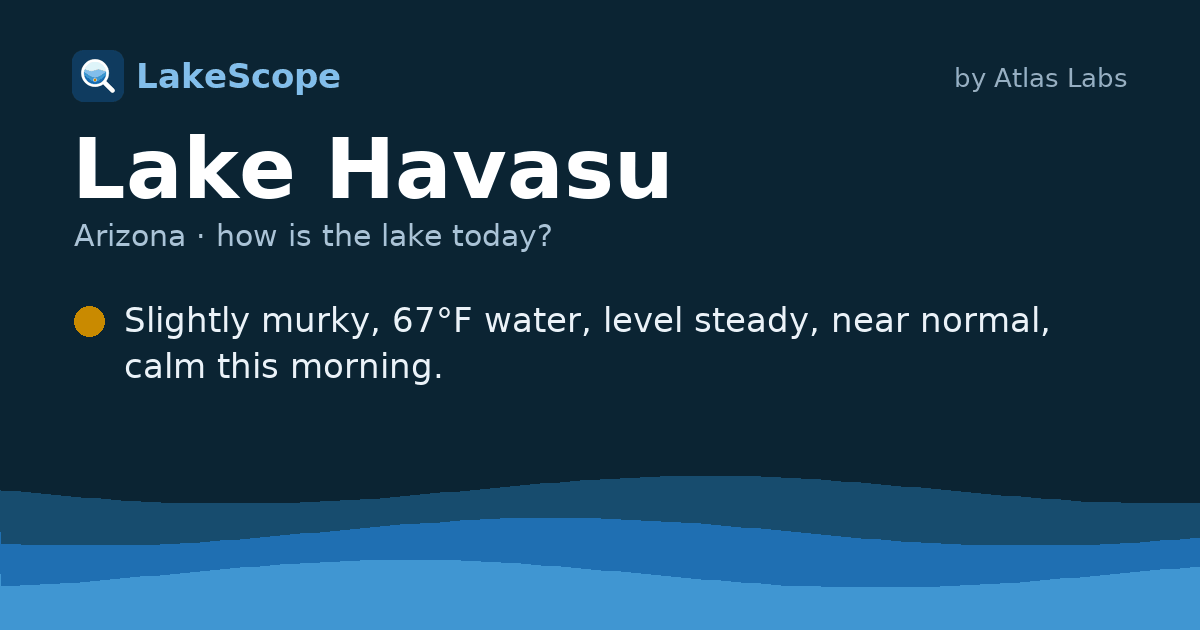
LakeScope shows today's water temperature, level, wind and bite times for Lake Havasu, so you can time your trip around current conditions instead of a seasonal guess.
Questions
What fish are in Lake Havasu?
Striped bass, smallmouth bass, largemouth bass and bluegill are the main species, with striped bass and smallmouth closely tied to rocky structure.
How deep is Lake Havasu?
around 90 feet at its deepest, with steep rock ledges giving fast access to deeper water close to shore.
Is Lake Havasu good for boating?
Yes, it's one of the busiest recreational boating lakes on the lower Colorado River, so expect heavy traffic especially near the London Bridge channel.
Which state is Lake Havasu in?
It sits on the Colorado River between Arizona and California, so check license rules for whichever state's water you're fishing.
Best structure to fish at Lake Havasu?
Rocky ledges dominate the lake, and trying different depths along the same wall is often more productive than searching for new spots.
Does river current affect fishing at Lake Havasu?
Yes, upstream releases can change flow with little warning, and that current affects where baitfish and predators hold along the lake's rock structure.
Lake Havasu every morning
Water temperature, level, wind and bite times on your phone.