
Lake Powell fishing and boating guide
Lake Powell is a maze of flooded canyons on the Colorado River, and that shape is the whole story: fish stack up against sheer rock walls and narrow upper arms instead of open flats. Striped bass, smallmouth, largemouth and walleye all share this water, each favoring a different kind of structure.
A lake shaped like a canyon system
Lake Powell winds about 186 miles up its canyons, with nearly 2,000 miles of shoreline, and reaches around 580 feet at its deepest near the dam, but most of that shoreline is vertical rock rather than a gentle slope. That changes how fish behave: instead of spreading along a gradual bank, they hold tight against walls, ledges and points where the depth changes fast.
The lake's many side canyons behave almost like separate mini-lakes, each with its own wind exposure, water clarity and temperature depending on how far it sits from the main channel and how much sun it gets.
Because the canyon walls run so steep, a boat anchored just a short distance from shore can already be sitting over genuinely deep water, which is unusual compared to most reservoirs where the shallows extend much further out before dropping off.
Fish species and where they sit
- Striped bass roam open water chasing baitfish and are often the most active fish in the lake, especially where bait is schooled.
- Smallmouth bass hold tight to rock: points, ledges and steep walls are their home water.
- Walleye tend to sit deeper along points and ledges, often feeding low and slow near the bottom.
- Largemouth bass favor the back of coves and quieter, more sheltered water away from the main channel current.
Striper patrol: following bait, not the bank
Stripers at Powell often travel in big, loose schools chasing shad, which means the best spot can shift from one trip to the next. Watch for surface activity or diving birds, and when you find bait, work swimbaits or live shad near it rather than committing to a single piece of structure.
Because the schools move, it often pays to cover water with your motor rather than anchoring and waiting, at least until you've located active fish. Once you find them, a second or third pass through the same area on a calm day can produce just as well as the first.
Season by season
| Season | Best bite | Where | Approach |
|---|---|---|---|
| Spring | Largemouth, smallmouth | Coves and shallow rock as water warms | Slow jig or drop-shot near bottom |
| Early summer | Striped bass | Open water over bait schools | Swimbait or live shad where bait is |
| Late summer | Walleye, striped bass | Deep points, steep walls, upper arms | Jig and minnow, slow, near bottom |
| Fall | Smallmouth, walleye | Rocky points and ledges | Jig and minnow or crankbait along the edge |
| Winter | Walleye, striped bass | Deep structure, slower presentation | Slow jig, fish deep and patient |
Spots worth a look
Points that drop away fast hold striped bass and smallmouth at 4 to 24 feet depending on the day, and the steep rock ledges nearby often carry walleye and smallmouth stacked tight to the wall. Upper arms where the canyon narrows toward the incoming river concentrate bait and can hold striped bass and walleye considerably deeper than you'd expect given the shallow-looking entrance. Coves give largemouth and striped bass a calmer, shallower option when the main channel is windy.
Don't overlook the backs of the narrowest side canyons, particularly early and late in the day. These areas warm and cool differently from the open lake and can hold fish that have moved away from pressure in the busier main channel.
Boat ramps and access
Lake Powell is managed as a major boating destination with marinas spread across its long shoreline, but ramp availability has shifted in recent years as water levels have moved. Always confirm a ramp is open and usable for your boat before heading out, since low water can leave some launches too shallow to use.
Because the lake is so long and the drive between marinas can take hours, it's worth planning which section of the lake you intend to fish before you launch rather than discovering partway through the day that you're far from your target water.
Water level changes everything here
Because Powell is a reservoir on the Colorado River behind Glen Canyon Dam, its level can rise and fall substantially over the course of a season and from year to year. A lower lake exposes new rock structure and can strand or relocate boat ramps, while a higher lake floods back into coves that were dry ground not long before. Checking the current level before you go matters more here than on most lakes.
A changing water level also means that a spot that fished well last season may sit differently relative to the water today, so it's worth treating your own memory of 'that one point' as a starting point to re-check rather than a guarantee.
Safety on open, deep water
- Wear a life jacket on every trip; Powell's open channel sections can turn choppy fast when wind funnels down a canyon.
- Watch for submerged rock and debris near newly exposed shoreline when the lake is running low.
- Cold water is a real risk outside of summer, even when air temperature feels warm.
- Check Utah and Arizona fishing license and limit rules, since the lake crosses the state line.
- Canyon walls can funnel and amplify wind unpredictably, so a side canyon that looks sheltered isn't always calmer than the open channel nearby.
Planning a multi-day trip
Because Powell is so large and many anglers camp or houseboat for several days at a time, it's worth building some flexibility into your plan rather than committing to a single stretch of shoreline for the whole trip. A canyon that's fishing poorly on day one because of wind or clarity may turn on a day later once conditions settle, and having a backup arm in mind keeps a slow morning from becoming a slow trip.
Check before you go
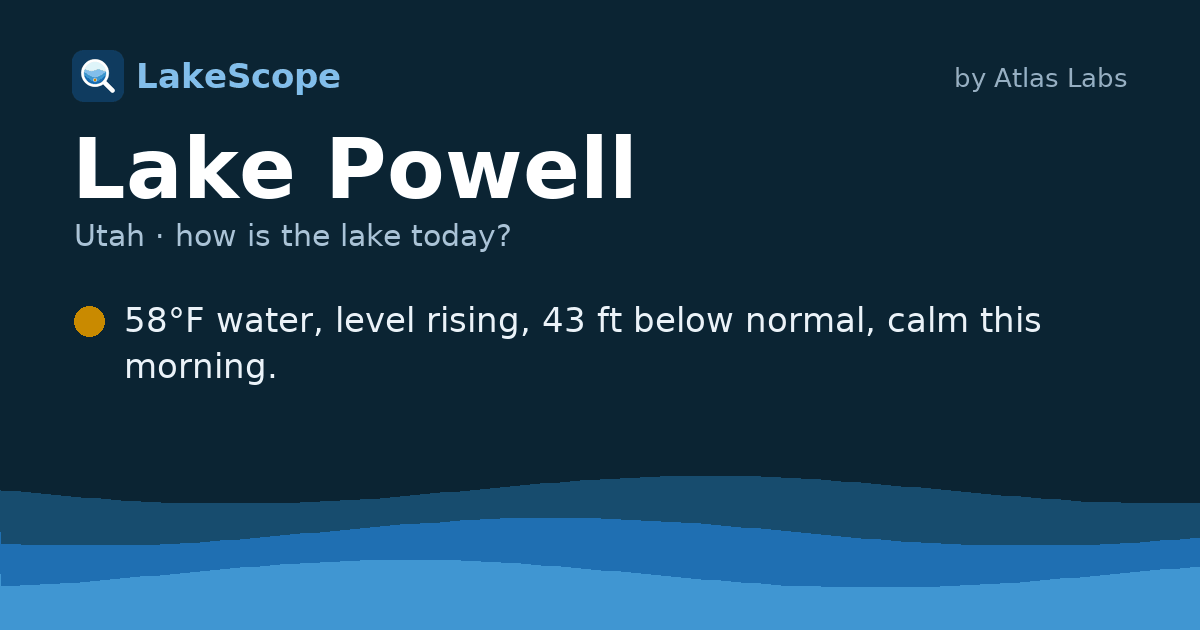
Water level moves the shoreline, ramps and structure on Lake Powell more than on most lakes. LakeScope shows today's water temperature, level, wind and bite times for the lake so you know what you're launching into.
Questions
How deep is Lake Powell?
around 580 feet at its deepest near Glen Canyon Dam, though most of the lake is shallower and highly variable by arm.
What fish are in Lake Powell?
Striped bass, smallmouth bass, largemouth bass and walleye are the main species anglers target.
Does Lake Powell's water level change a lot?
Yes, as a Colorado River reservoir its level can move substantially over a season and across years, which affects ramps, coves and exposed structure.
What state is Lake Powell in?
It sits mostly in Utah but extends into Arizona, so check licensing rules for both states depending on where you fish.
Best way to find striped bass at Lake Powell?
Look for schooling bait in open water or diving birds, then work swimbaits or live shad near the activity rather than fishing a fixed spot.
Is it worth checking ramp status before heading to Lake Powell?
Yes, shifting water levels have stranded or closed some ramps in recent years, so confirming your planned launch is open and usable for your boat is worth doing ahead of time.
Lake Powell every morning
Water temperature, level, wind and bite times on your phone.