
Clear Lake, California fishing guide
Clear Lake is a natural lake north of San Francisco with a long-standing reputation among bass anglers, and crappie and catfish round out a strong supporting cast. At around 60 feet at its deepest, it's a shallower lake overall, which keeps fish within reach of most anglers without specialized deep-water gear.
What makes Clear Lake good fishing
Covering roughly 43,000 acres with around 100 miles of shoreline, Clear Lake is relatively shallow for its size, which lets sunlight and warmth reach most of the lake bottom and supports dense weed growth that largemouth bass thrive around. That combination of shallow depth and abundant cover is a big part of why the lake consistently ranks among California's top bass fisheries.
Crappie and catfish share the lake and tend to concentrate on steeper drop-offs and ledges rather than the weedy flats bass prefer.
Being a natural lake rather than a reservoir, Clear Lake's basic shoreline and bottom contours have had a long time to settle into a stable, mature structure, which is part of why local knowledge of specific weed lines and drop-offs carries real weight here, often more than it would on a reservoir that's still settling into a new shape year by year.
Species guide
- Largemouth bass are the headline fish, holding around weed edges, docks and shoreline cover.
- Crappie stack on steep ledges, especially where deeper water sits close to the bank.
- Catfish share similar ledge structure, feeding more actively after dark and in warm water.
- Bluegill round out the panfish mix in shallower, weedier water, and are a reliable option when bass fishing is slow.
- Because the lake is shallow and warms early, its fishing season tends to get going earlier in spring than many deeper lakes nearby, giving anglers a head start on the year.
A seasonal plan
| Season | Target | Where | Bait |
|---|---|---|---|
| Spring | Largemouth bass | Shallow weed edges and coves | Spinnerbait or shallow crankbait |
| Summer | Crappie, catfish | Steep ledges, deeper water | Small jig or minnow under a float |
| Fall | Largemouth bass | Upper arms, baitfish concentrations | Small jig or minnow under a float |
| Winter | Crappie, catfish | Deepest available ledges | Small jig or minnow, very slow, deep |
Ledges and arms to try
The lake's steep ledges are the most consistent producers for crappie and catfish, often holding fish from 8 to 18 feet right along the drop. Where the lake narrows into its feeding arms, baitfish concentrate and both crappie and largemouth bass follow them in, sometimes sitting surprisingly deep at 36 to 40 feet in these narrower channels.
Weed edges deserve special attention for largemouth, especially where a healthy green weed line meets slightly deeper, open water. That transition is often more productive than fishing either the thick weeds or the open water alone.
Docks along developed stretches of shoreline are another reliable largemouth target, offering shade and cover in otherwise open, shallow water, and they're often overlooked by anglers focused only on natural weed and rock structure, especially during the brightest part of a summer afternoon.
Launching and getting around
Clear Lake has public and resort-area access typical of a popular Northern California fishing lake. Confirm your chosen launch point before heading out, and expect busier boat traffic on weekends during peak bass season.
Because much of the lake's best largemouth water sits in shallow, weedy coves, a trolling motor or electric motor for quiet, precise positioning is especially useful here compared to lakes where fish hold mainly in open deep water.
Several small towns ring the lake with their own local launch points, so it's worth checking which community sits closest to the arm you plan to fish rather than defaulting to the busiest, best-known ramp on a weekend when parking and dock space can be tight.
Water level and algae
Clear Lake's level shifts with rainfall and regional water management, and because the lake is naturally shallow and nutrient-rich, it's also prone to algae blooms in warm months. Check current advisories before swimming or letting pets near the water, and keep an eye on surface conditions whenever the lake looks unusually green or scummy.
A lower lake in late summer and fall can concentrate warm, nutrient-rich water further, which is part of why bloom risk and advisories tend to be more common later in the warm season than in spring. Checking current conditions before a summer trip is a reasonable habit on a lake this shallow and this popular.
Even without a bloom present, a shallower lake like this one tends to show bigger day-to-day swings in surface temperature than a deep lake would, so checking current conditions close to your trip date is especially worthwhile here, rather than relying on how the lake fished on a similar date last year.
Safety and rules
- Wear a life jacket on the water at all times.
- Watch for sudden afternoon wind, which can build chop quickly across open stretches.
- Follow current algae advisories for the lake and avoid contact with visibly discolored or scummy water.
- Check California fishing license and limit rules before heading out.
- Be mindful of weed-fouled propellers in the shallow, vegetated coves that make up much of the best bass water.
- Keep young children and pets away from any shoreline where the water looks unusual, even if the rest of the lake looks clear that day.
A lake worth learning in detail
Clear Lake's relatively small footprint compared to its fishing reputation means the best water gets fished hard, especially on weekends in peak bass season. Spending time learning the subtle differences between similar-looking weed lines and ledges, rather than assuming every stretch of visible weed is equally productive, tends to separate a good day from a great one here.
Check before you go
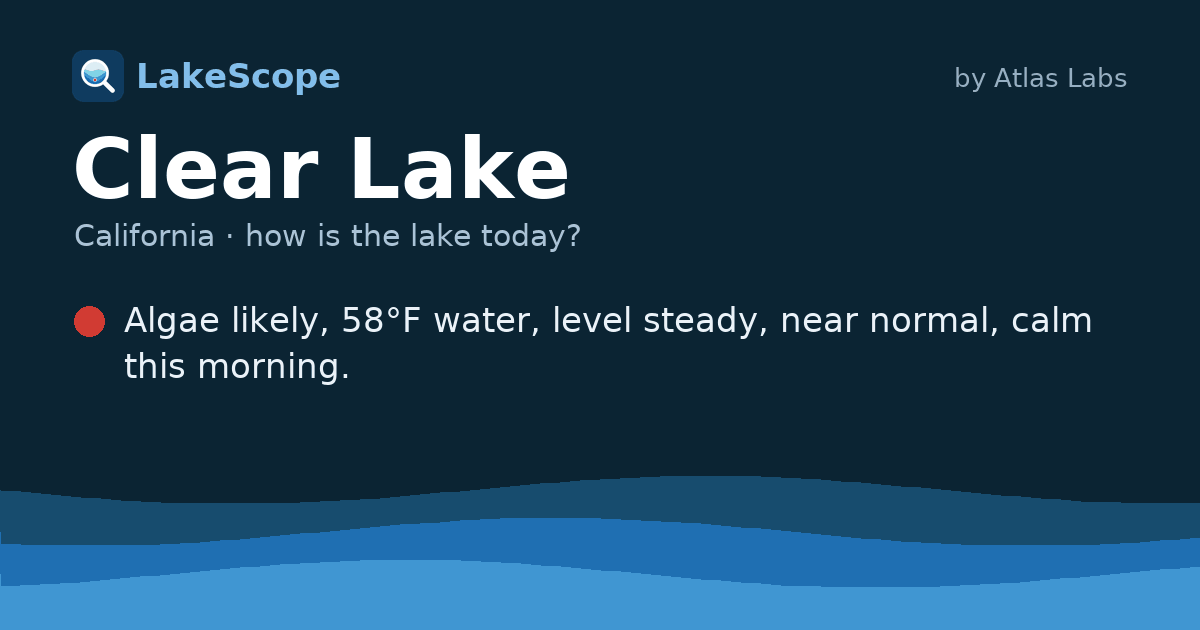
LakeScope shows today's water temperature, level, wind and bite times for Clear Lake, so you can plan your trip around the day you'll actually have rather than a general seasonal average.
Questions
Why is Clear Lake known for bass fishing?
Its shallow depth and extensive weed growth give largemouth bass abundant cover, which has made it one of California's top bass fisheries for years.
How deep is Clear Lake?
Around 60 feet at its deepest, shallow enough that most of the lake warms and supports weed growth.
What other fish besides bass are in Clear Lake?
Crappie, catfish and bluegill are all present, with crappie and catfish often concentrated on steep ledges.
Does Clear Lake get algae blooms?
Yes, warm, nutrient-rich conditions can lead to algae blooms in warmer months, so check current advisories before swimming or letting pets in the water.
Where is Clear Lake located?
It's in Lake County, north of the San Francisco Bay Area in Northern California.
Is Clear Lake a natural lake or a reservoir?
It's a natural lake, which is part of why its weed lines, coves and drop-offs have a long-settled structure that local anglers rely on.
Clear Lake every morning
Water temperature, level, wind and bite times on your phone.